


What is PPC and How Does Google Ads Work?

PPC in Google AdWords (now Google Ads) is a pay-per-click advertising model where businesses bid on keywords to display ads in Google search results, paying only when someone clicks. With over 3.5 billion searches daily, it’s one of the fastest ways to drive qualified traffic to your website, offering an average ROI of $8 for every $1 spent.
It works through a real-time auction. When a user searches, Google determines ad placement using Ad Rank, which is based on your bid and Quality Score. A highly relevant ad can win a better position than a higher bidder and cost less per click.

Ads are shown across two main networks:
- The Search Network: Text ads appear on Google search results pages, capturing users with high commercial intent who are actively looking for your products or services.
- The Display Network: Visual ads appear on over 2 million websites, apps, and videos, reaching 90% of internet users. This is ideal for building brand awareness and remarketing.
Unlike SEO, which takes time, PPC offers immediate visibility, making it invaluable for launching new offers or generating quick results.
Terms related to ppc in google adwords:
The Power of Keywords and Quality Score in PPC
Success in Google Ads hinges on mastering keywords and Quality Score.
Keyword Research is about finding the exact phrases your customers use and understanding their intent. Google’s Keyword Planner is a key tool for this. You control ad triggers using match types:
- Broad Match: Offers the widest reach, showing ads for related searches and synonyms.
- Phrase Match: More targeted, showing for searches that include the meaning of your keyword.
- Exact Match: The most precise, showing for searches with the same intent as your keyword.
Quality Score is Google’s 1-10 rating of your ad’s quality and relevance. A higher score leads to better ad positions and a lower Cost Per Click (CPC). It’s determined by your ad’s relevance, expected click-through rate, and landing page experience. Improving this score is one of the most effective ways to make your budget go further. For more details, see Google’s guide on how to improve your quality score.
Exploring Different Google Ads Campaign Types
Choosing the right campaign type is crucial for aligning with your marketing goals. As Google notes, your goals and brand strategy should guide your choice. Here are the main options:
- Search Ads: Text ads on search results, perfect for capturing active demand and driving leads or sales. Explore Search Ads.
- Display Ads: Visual ads across the web, excellent for brand awareness and remarketing. Explore Display Ads.
- Video Ads: Engage audiences on YouTube and the Display Network to tell your brand’s story. Explore Video Ads.
- Shopping Ads: Visual product listings for e-commerce businesses to showcase inventory directly in search results. Explore Shopping Ads.
- Performance Max: An AI-driven, all-in-one campaign type that maximizes conversions across all of Google’s channels. Explore Performance Max.
- App Ads: Designed to drive app installs and in-app actions across Google’s networks. Explore App Ads.
For help selecting the best fit, refer to Google’s guide on how to Choose the right campaign help page.
Your Blueprint for Mastering PPC in Google AdWords
A successful PPC in Google AdWords campaign requires a strategic architecture. A well-organized account follows a clear hierarchy: Campaigns (where you set budgets and targeting), Ad Groups (which group related keywords), and finally, your Keywords and Ads.

The setup process begins with a clear goal (e.g., sales, leads, calls), which dictates your campaign type, targeting, and budget. After conducting keyword research and creating tightly themed ad groups, you’ll craft compelling ad copy that speaks to user intent. The most critical step is setting up conversion tracking. Without it, you can’t know which clicks turn into customers, making it impossible to optimize for what matters. A strong return on investment is the direct result of this strategic planning, proper tracking, and continuous optimization.
Smart Bidding, Budgeting, and Ad Extensions
Effective money management is crucial for PPC performance. Google provides flexible tools for controlling your budget and bids.
Budgeting is set at the campaign level as a daily average. While Google may spend more on high-traffic days, it balances out over the month. Budgets can start small and scale as you identify what works.
Bidding determines how you compete in the auction. Manual bidding offers granular control, while automated Smart Bidding strategies use Google’s AI to optimize for goals like maximizing conversions or achieving a target cost-per-acquisition (CPA). The AI analyzes countless signals in real-time to make split-second bid adjustments.
Ad extensions are a powerful way to increase your ad’s size and visibility, often improving Click-Through Rates. They provide more information and reasons to click.

Key extensions include sitelinks (extra links to your site), callouts (highlighting offers like “24/7 Support”), structured snippets (showcasing product features), location extensions (for local businesses in areas like Tampa or Orlando, Florida), and image extensions (adding visuals to search ads).
Key Metrics for Measuring PPC Performance
Successful PPC in Google AdWords campaigns are built on obsessive attention to the right metrics. We don’t just launch campaigns; we constantly track, analyze, and optimize based on performance data.
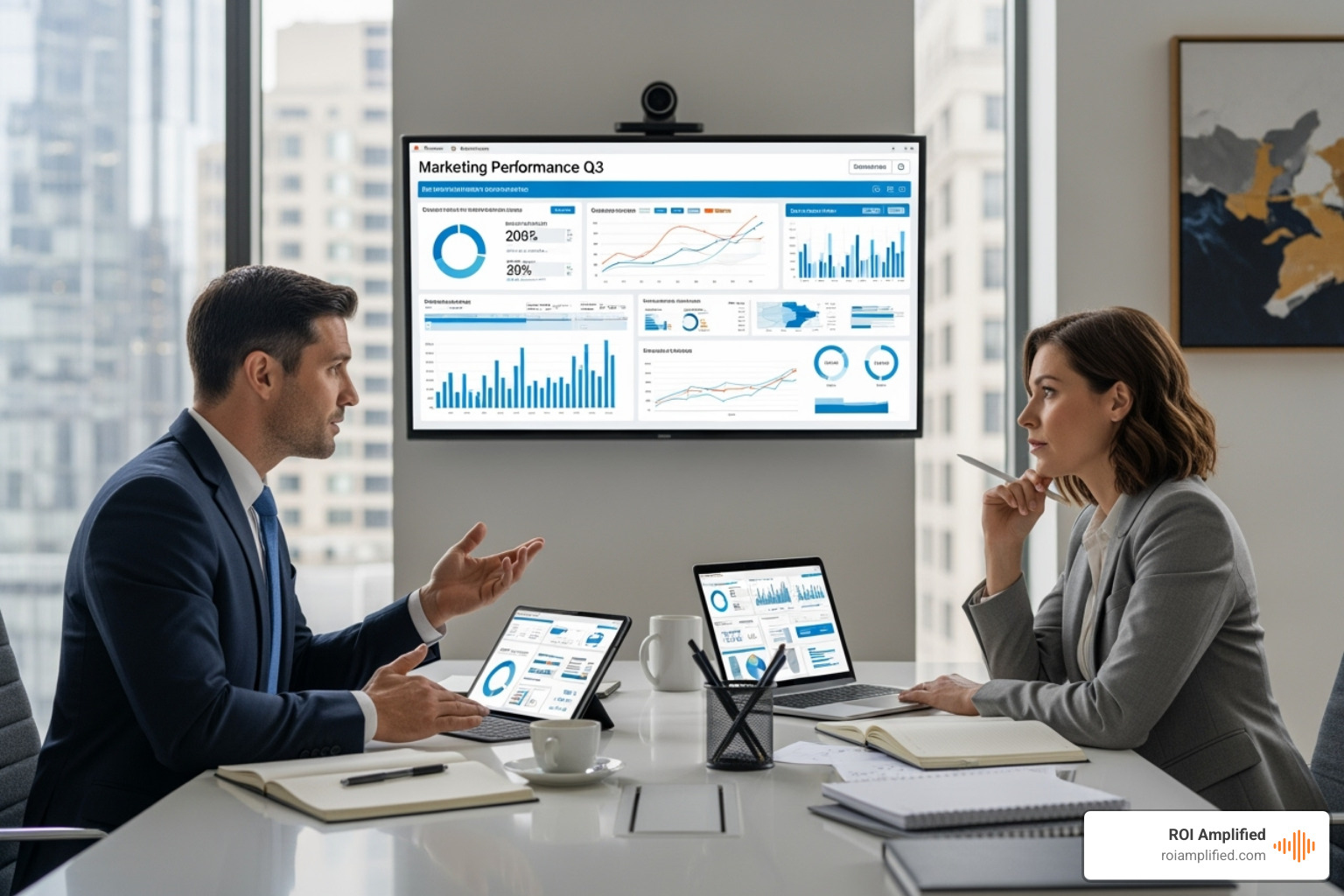
- Click-Through Rate (CTR): The percentage of impressions that result in a click, indicating ad relevance.
- Conversion Rate: The percentage of clicks that complete a desired action (e.g., a purchase or lead form submission).
- Cost Per Acquisition (CPA): The average cost to acquire one conversion.
- Return On Ad Spend (ROAS): The revenue generated for every dollar spent on ads. An 8:1 ROAS means $8 back for every $1 invested.
- Impression Share: The percentage of impressions your ads received versus the total they were eligible for.
- Quality Score: The rating of your ad and landing page relevance, which directly impacts your costs.
These metrics are the intelligence that drives every optimization decision, from adjusting bids to refining ad copy.
How PPC in Google AdWords Complements Your SEO Strategy
PPC and SEO are not competitors; they are powerful teammates. Using both creates a dominant presence on search results pages that is difficult for competitors to overcome.
By securing both a paid ad and an organic listing, you own more digital real estate, dramatically increasing visibility and click-through chances. This is especially effective since many users don’t distinguish between paid and organic results.
PPC provides an immediate data goldmine for SEO. You can quickly identify which keywords and ad copy drive conversions, then use that insight to prioritize your long-term SEO efforts. It serves as a rapid testing ground for messaging and offers before committing to a full content strategy.
SEO takes time to build authority. PPC in Google AdWords fills that gap, driving traffic and revenue from day one. This allows you to generate results while your organic rankings climb. This integrated approach builds brand recognition, credibility, and a powerful feedback loop that makes both channels more effective. To learn more about building a strong organic foundation, explore our SEO services.
Optimizing for Peak Performance and Lasting ROI
The truth about PPC in Google AdWords is that launching a campaign is just the beginning. The real work—and the source of exceptional returns—lies in continuous optimization. A “set it and forget it” approach leads to wasted budget, while a commitment to ongoing refinement transforms campaigns into revenue-generating machines.
This optimization process involves several key tactics:
- A/B Testing Ad Copy: We run different versions of ads to let real user data determine what messaging works best. A small change in a headline can significantly boost click-through rates.
- Landing Page Optimization: The user journey doesn’t end at the click. We ensure your landing page is fast, mobile-friendly, and delivers exactly what the ad promised, which is crucial for converting visitors and maintaining a high Quality Score.
- Negative Keywords: This is one of the most powerful tools for improving efficiency. By adding terms you don’t want to trigger your ads (e.g., “free,” “jobs”), you eliminate clicks from users who were never going to convert.
- Audience Targeting and Remarketing: We go beyond keywords to refine who sees your ads based on demographics, interests, and past behavior. Remarketing allows us to re-engage users who visited your site but didn’t convert, gently guiding them back.
This is a constant cycle: review performance data, identify opportunities, implement improvements, and measure the results. At ROI Amplified, we obsess over this process, staying ahead of platform updates and avoiding common pitfalls like overly broad targeting or poor mobile experiences. We know that achieving an impressive return on investment is the direct result of this dedicated, expert management.
Ready to stop leaving money on the table and see what an expertly optimized PPC in Google AdWords campaign can do for your business? Get a free proposal for your Google Ads management today, and let’s build a campaign that doesn’t just perform—it dominates.

